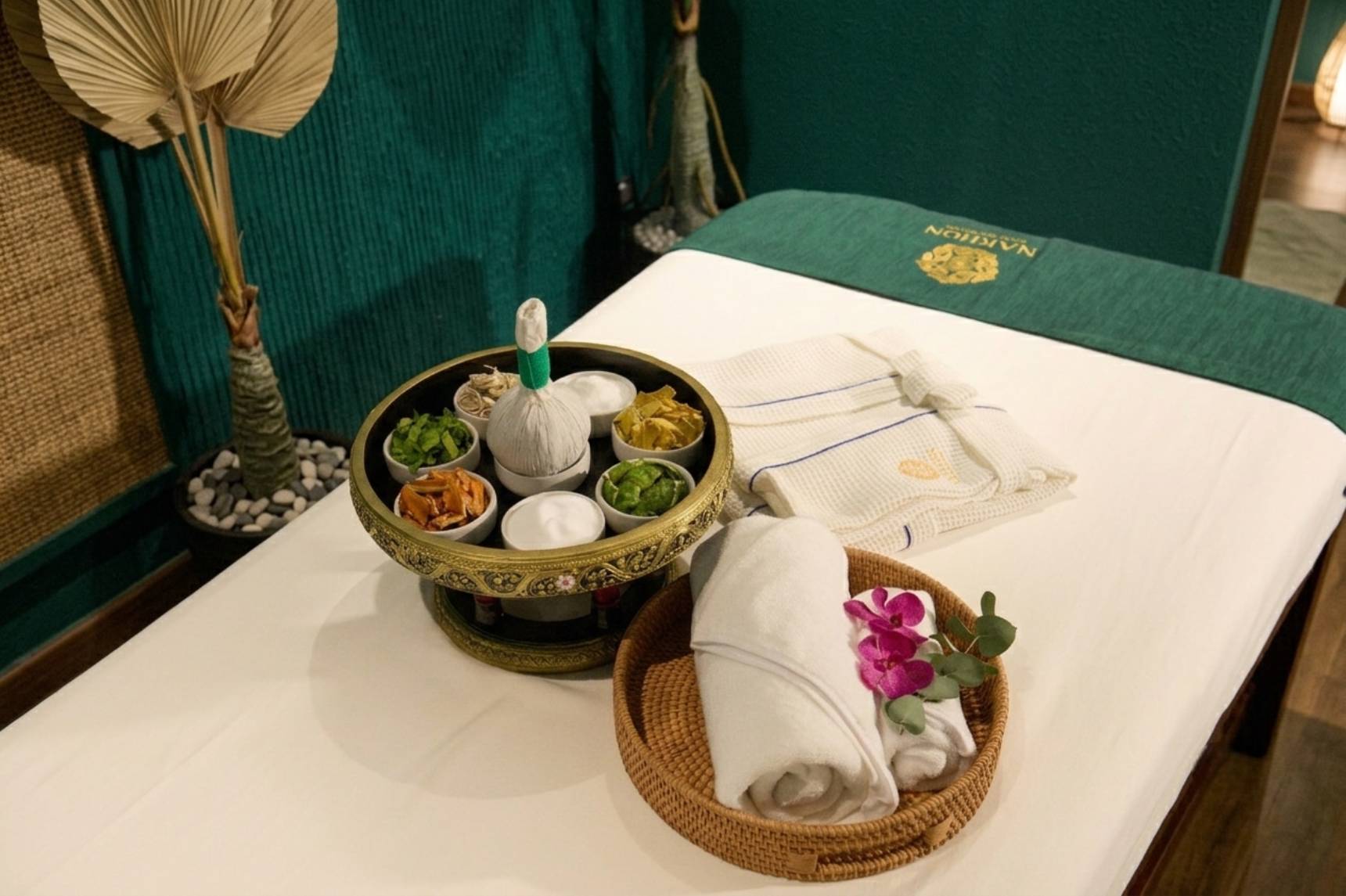
If you have ever stepped into a traditional Thai spa, your senses were likely greeted by an intoxicating, earthy aroma—a complex, steaming blend of sharp citrus, deep ginger, and cooling camphor. This distinct and welcoming fragrance is the signature of one of the world’s most revered therapeutic treatments: the Thai Herbal Compress. Known in its native language as Luk Pra Kob (translated roughly to "pressing herbal sphere"), this tightly bound, steaming bundle of herbs has been a cornerstone of traditional healing for centuries.
At Nakhon Spa, we believe that true wellness is born at the intersection of ancient wisdom and modern understanding. When our therapists press that warm, fragrant muslin bundle against your skin, they are not simply performing a spa routine; they are executing a precisely calibrated medical tradition passed down through generations. But what exactly is inside that warm cloth? Where did this practice originate, and more importantly, how does it actually work on a biological level?
In this comprehensive guide, we will take you on a journey of discovery. We will unearth the rich, vibrant history of the Thai herbal compress, break down the sophisticated botanical science behind its ingredients, and reveal exactly how heat and herbs combine to heal the human body.
The Deep Roots of Healing: A Journey Through Time
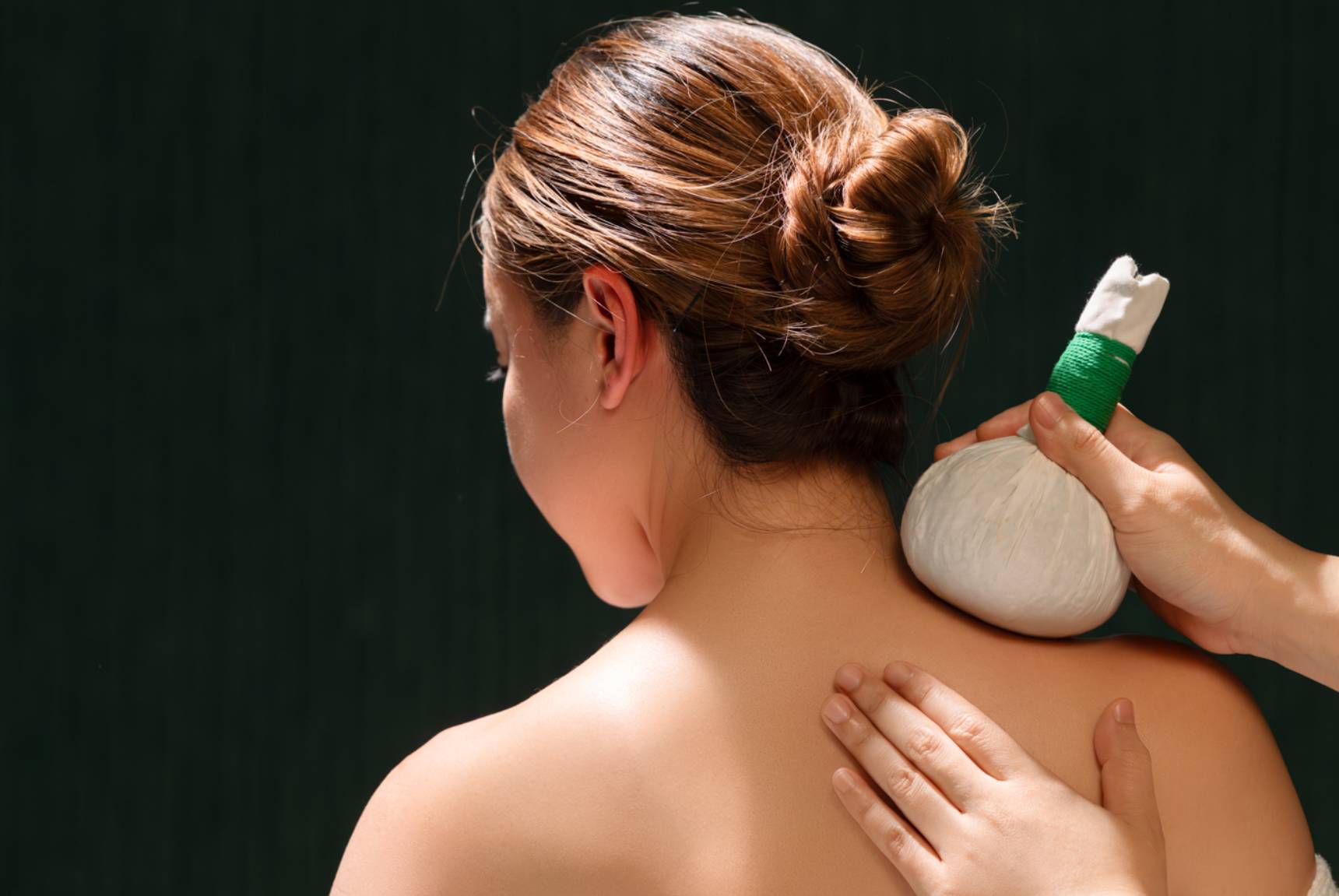
To understand the Thai herbal compress, we must first travel back in time. The history of this therapy is not a simple, linear timeline; rather, it is a rich tapestry woven from various Eastern philosophies, agricultural necessity, and royal refinement. Traditional Thai Medicine (TTM) is a holistic system that views the body as a composition of four vital elements: earth, water, wind, and fire. When these elements fall out of balance, disease and discomfort arise. The herbal compress was ingeniously designed to restore this delicate equilibrium, specifically targeting the "wind" (circulation and movement) and "fire" (temperature and inflammation) elements.
The Influence of Ayurveda and the Buddha's Physician
The origins of the Thai herbal compress are deeply intertwined with the spread of Buddhism and Ayurvedic medicine from India to Southeast Asia. Over 2,500 years ago, Ayurvedic practices began migrating eastward, brought by monks and traveling physicians. The most legendary figure in this migration is Jivaka Kumar Bhaccha, a renowned yogi and the personal physician to the Buddha himself. In Thailand, Jivaka is affectionately known as the "Father of Medicine."
It is widely believed that the earliest iterations of herbal compress therapy were utilized by these traveling monks. Enduring long, exhausting journeys by foot across rugged terrains, monks suffered from severe muscle fatigue, joint pain, and inflammation. To treat these ailments, they gathered indigenous medicinal plants, wrapped them in available cloth, heated them over campfire steam, and applied them to their aching bodies. This rudimentary practice was the birth of Luk Pra Kob.
From the Rice Paddies to the Royal Palaces
As the practice integrated into the local culture, it became deeply rooted in Thailand’s agrarian society. For centuries, the backbone of the Thai economy was rice farming—a notoriously backbreaking profession. Farmers spent long hours bent over in flooded paddies, leading to chronic lower back pain, severe muscle cramps, and joint stiffness.
Village healers, known as Mor Ya, refined the monks' herbal bundles, carefully selecting specific local flora known for their anti-inflammatory and analgesic properties. The compress became a vital community resource, a way to keep the farmers healthy and capable of working the fields. It was the ultimate folk medicine: accessible, natural, and highly effective.
However, the journey of the herbal compress did not stop in the villages. During the Ayutthaya period (1351–1767), Traditional Thai Medicine reached a golden age. The royal court took an intense interest in these healing modalities. Royal physicians began standardizing the recipes, seeking out the highest quality herbs, and refining the application techniques. What began as a rough, survival-based treatment for monks and farmers was elevated to a luxurious, highly prescribed medical therapy for Thai royalty. The muslin cloths became finer, the herbal ratios became exact sciences, and the steaming methods were perfected.
The Alchemy of Nature: Inside the Muslin Sphere
If you were to untie the string of a Thai herbal compress at Nakhon Spa, you would find a vibrant, aromatic kaleidoscope of dried roots, leaves, and resins. There is no single, universal recipe for a compress; traditional healers customize the blend based on the specific ailments of the patient. However, a classic, scientifically robust compress relies on a foundational orchestra of botanicals, each playing a specific role in the healing process.
The Superstar Herb: The Wonders of Plai
If there is a leading actor in the Thai herbal compress, it is undoubtedly Plai (Zingiber cassumunar). A close cousin to common ginger, Plai is a rhizome that holds a legendary status in Thai medicine. Visually, it looks like ginger but boasts a deeper, more amber-yellow core and a distinctly medicinal, earthy, and slightly cooling aroma.
For centuries, Thai mothers have used Plai to soothe children's bruises, and massage therapists have relied on it to treat severe muscle strains. Modern science has vindicated this ancient reliance. Plai contains powerful essential oils, most notably sabinene and terpinen-4-ol. These compounds have been shown in pharmacological studies to possess profound anti-inflammatory properties. In fact, research indicates that the active ingredients in Plai can inhibit the COX-2 enzyme—the same inflammatory pathway targeted by over-the-counter NSAIDs like ibuprofen. When heated and applied to the skin, Plai acts as a potent, natural painkiller, reducing tissue swelling and deeply relaxing spastic muscles.
The Supporting Cast: Turmeric, Lemongrass, and Kaffir Lime
Working in synergy with Plai is a cast of equally impressive botanicals.
Curcuma longa, widely known as Turmeric, is the element that gives the compress its golden hue. Beyond its culinary uses, turmeric is loaded with curcumin, a compound celebrated globally for its antioxidant and anti-inflammatory properties. In the context of the compress, turmeric acts as a dermal healer. It soothes skin irritations, promotes cellular repair, and leaves a subtle, healthy glow on the body.
Lemongrass (Cymbopogon citratus) and Kaffir Lime (Citrus hystrix) act as the circulatory stimulators of the bundle. Lemongrass contains citral, which has mild astringent and antibacterial properties. More importantly, its sharp, uplifting scent acts as a mild vasodilator, helping to expand blood vessels when absorbed through the skin. Kaffir lime, specifically its bumpy rind, is rich in limonene and beta-pinene. In traditional Thai medicine, the rind is believed to draw out coldness from the body and stimulate the "wind" element, promoting healthy blood flow and lymphatic drainage.
The Aromatic Catalysts: Camphor, Borneol, and Tamarind Leaves
To bind the effects of the roots and citrus, healers add specific leaves and resins. Tamarind leaves (Tamarindus indica) are slightly acidic and rich in vitamin C. In the compress, they act as a gentle exfoliant and skin purifier, helping to clear the pores so the other herbal oils can penetrate more deeply.
Finally, the inclusion of Camphor (Cinnamomum camphora) and Borneol provides the unmistakable, penetrating aroma that defines the treatment. These crystalline compounds are fascinating from a scientific standpoint because they create a dual sensation of cooling and warming. When they vaporize in the steam and hit the olfactory system, they immediately clear the respiratory tracts, allowing for deeper, more oxygen-rich breathing during the massage. Topically, they act as counter-irritants; by stimulating the nerve endings in the skin with a mild cooling sensation, they distract the brain from deeper muscle pain, providing immediate relief.
The Modern Science of the Thai Herbal Compress
While the history and folklore are captivating, modern spa-goers often ask: How does simply pressing a hot bag of leaves against my skin actually heal my muscles? The answer lies in the fascinating intersection of thermodynamics, transdermal absorption, and neurology. The Thai herbal compress is essentially a highly sophisticated delivery system for phytotherapy (plant medicine).
Thermotherapy: The Power of Heat
The most immediate physical mechanism at play is thermotherapy—the therapeutic application of heat. The compress is traditionally steamed until it is quite hot. When this heat is applied to the skin, a cascade of physiological responses occurs.
First, the heat triggers localized vasodilation. The blood vessels in the applied area widen, which significantly increases blood flow. This rush of fresh, oxygenated blood brings essential nutrients to damaged or fatigued muscle tissues, accelerating cellular repair. Simultaneously, the increased circulation helps to flush out metabolic waste products, such as lactic acid, which build up in muscles after exertion and cause that familiar sensation of soreness.
Furthermore, heat alters the viscoelastic properties of collagen—the main structural protein in our fascia and connective tissues. When collagen is warmed, it becomes more pliable and extensible. This is why a Thai herbal compress massage is incredibly effective at restoring range of motion and releasing tight, frozen joints. The heat physically melts the tension in the fascial web holding your muscles together.
Phytotherapy and Transdermal Absorption
Heat alone is healing, but it is the combination of heat and herbs that makes the Luk Pra Kob extraordinary. The human skin is a formidable barrier, designed to keep foreign substances out. The outermost layer, the stratum corneum, is tough and largely waterproof. However, the skin is highly permeable to lipid-soluble (fat-soluble) substances, such as the volatile essential oils locked inside the herbs.
This is where the steam comes in. The steam acts as an extraction method, drawing the essential oils out of the dried herbs and turning them into a warm, liquid essence that coats the muslin cloth. When the hot cloth is pressed into the skin, the heat serves a secondary purpose: it dilates the pores and increases the kinetic energy of the herbal molecules, drastically enhancing transdermal absorption.
The medicinal compounds of the Plai, Turmeric, and Lemongrass bypass the digestive system entirely and are absorbed directly into the local bloodstream and subcutaneous tissues. This allows the anti-inflammatory agents to go exactly where they are needed most—into the inflamed muscle belly or the aching joint—without being metabolized and diluted by the liver first.
The Aromatherapy Connection: Rewiring the Brain
The healing extends beyond the muscular system and into the nervous system. The olfactory bulb, the structure in the front of the brain that processes smells, has a direct neural connection to the limbic system, which is the emotional and memory center of the brain.
As the therapist applies the compress, the steam carries the volatile molecules of camphor, lime, and ginger directly into your nasal passages. These scents trigger an immediate parasympathetic nervous system response—the "rest and digest" mode. Heart rate slows, blood pressure drops, and the brain reduces the production of cortisol (the stress hormone) while upregulating the production of serotonin and dopamine. Therefore, the compress does not just physically force the muscles to relax; it chemically commands the brain to let go of tension.
Evidence-Based Benefits: What Modern Research Says
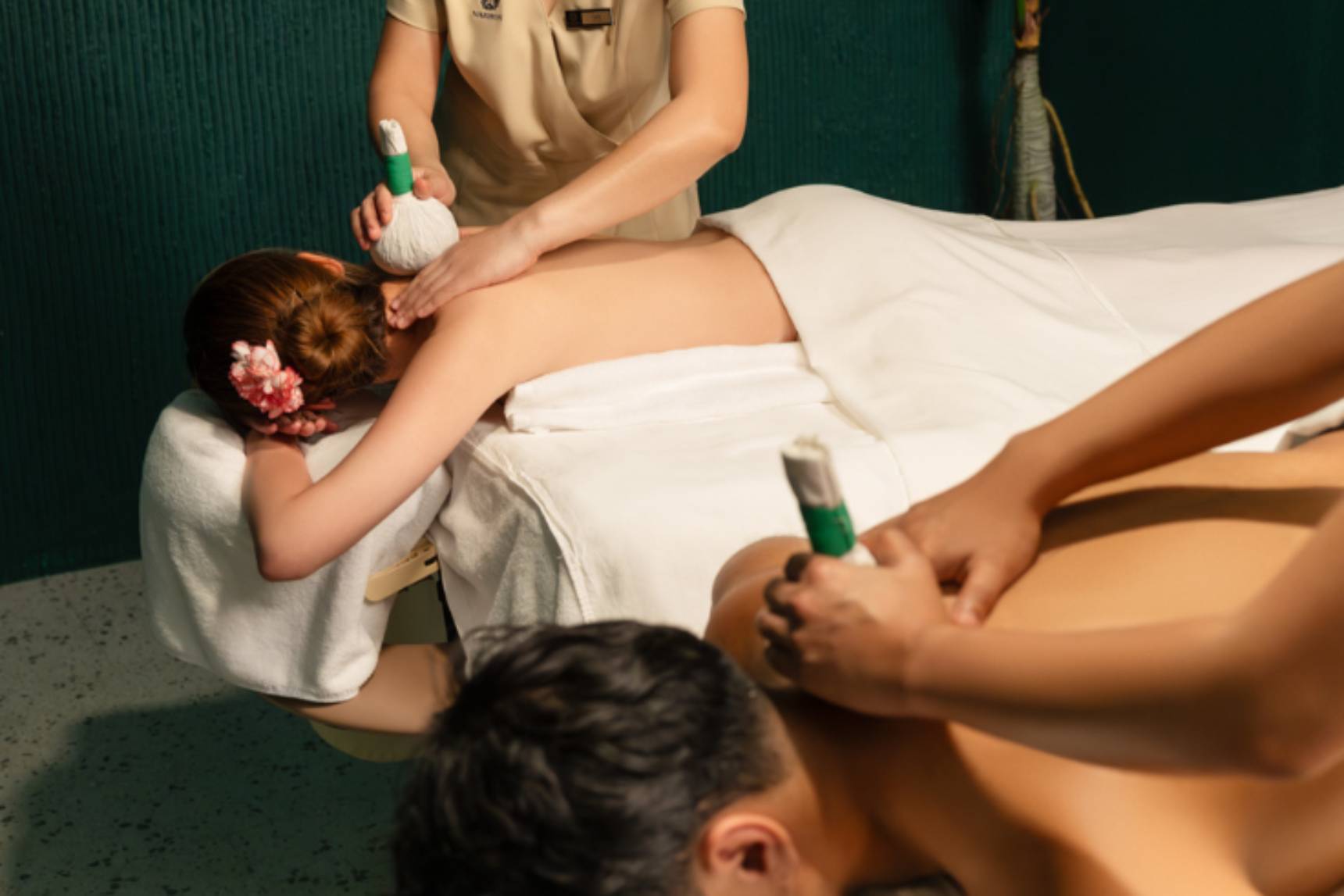
At Nakhon Spa, we honor the ancient texts, but we also appreciate the validation of modern clinical research. In recent decades, universities and medical institutions, particularly in Thailand, have subjected the Thai herbal compress to rigorous scientific study. The results have consistently backed up what the village healers knew centuries ago.
- Osteoarthritis Relief: Clinical trials comparing the use of Thai herbal compresses to oral NSAIDs in patients with osteoarthritis of the knee have shown remarkable results. Patients receiving compress therapy reported equivalent pain relief and improved joint mobility compared to those taking medication, but without the negative gastrointestinal side effects associated with pills.
- Post-Partum Recovery: In traditional Thai culture, a practice called Yu Fai utilizes herbal compresses extensively for new mothers. Studies have shown that the application of these hot herbal bundles to the abdomen and lower back significantly reduces postpartum uterine pain, speeds up the shrinking of the uterus, and helps release muscle tension from labor.
- Delayed Onset Muscle Soreness (DOMS): For athletes and fitness enthusiasts, research indicates that the application of an herbal compress immediately following intense physical exertion significantly reduces the severity of DOMS. The combination of heat flushing out lactic acid and Plai reducing microscopic tissue inflammation drastically cuts down recovery time.
Fun Facts and Discoveries
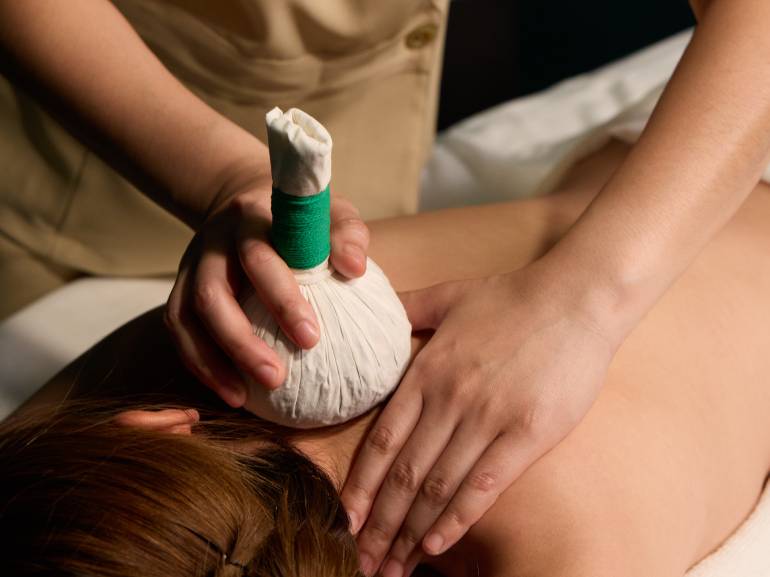
- The Pounding Technique: You will notice that therapists at Nakhon Spa do not just rub the compress on you; they use a rhythmic rolling, pressing, and sometimes pounding motion. This is called Klueng. It is designed to act like a natural pump, pushing the herbal juices deeply into the skin while simultaneously stimulating the Sen lines (the energetic pathways of the body according to Thai medicine).
- A Cloth with a Purpose: The muslin cloth used to wrap the herbs is not just a convenient carrying case. Unbleached cotton muslin has the perfect porosity to allow steam and essential oils to escape while holding the raw plant matter inside. It also provides a gentle, microscopic exfoliation to the skin as it is rubbed across the body.
- Zero Waste Origins: Historically, once a compress had lost its aroma and medicinal potency after multiple uses, it was not thrown away. Farmers would empty the boiled herbs into their bathwater for a soothing soak, or use the organic matter as nutrient-rich compost for their gardens—a true testament to the sustainable nature of traditional healing.
Experiencing the Magic at Nakhon Spa
Understanding the rich history and complex science of the Thai herbal compress makes experiencing it all the more profound. At Nakhon Spa, we have meticulously curated our Luk Pra Kob treatments to honor these ancient traditions while providing a luxurious, deeply relaxing modern spa experience.
Our therapists are rigorously trained in the anatomical application of the compress, ensuring that the therapeutic heat and botanical oils are delivered exactly where your body needs them most. We source only the highest quality, organically grown herbs to ensure maximum medicinal potency. Whether you are seeking relief from chronic back pain, recovering from an intense workout, or simply looking to melt away the accumulated stress of daily life, the steaming, fragrant touch of our herbal compress offers a healing journey unlike any other.
The next time you lie on our massage table and feel that warm, aromatic sphere press into your shoulders, you will know that you are not just receiving a spa treatment. You are absorbing 5,000 years of medical history, a symphony of botanical science, and the profound, healing power of nature itself.