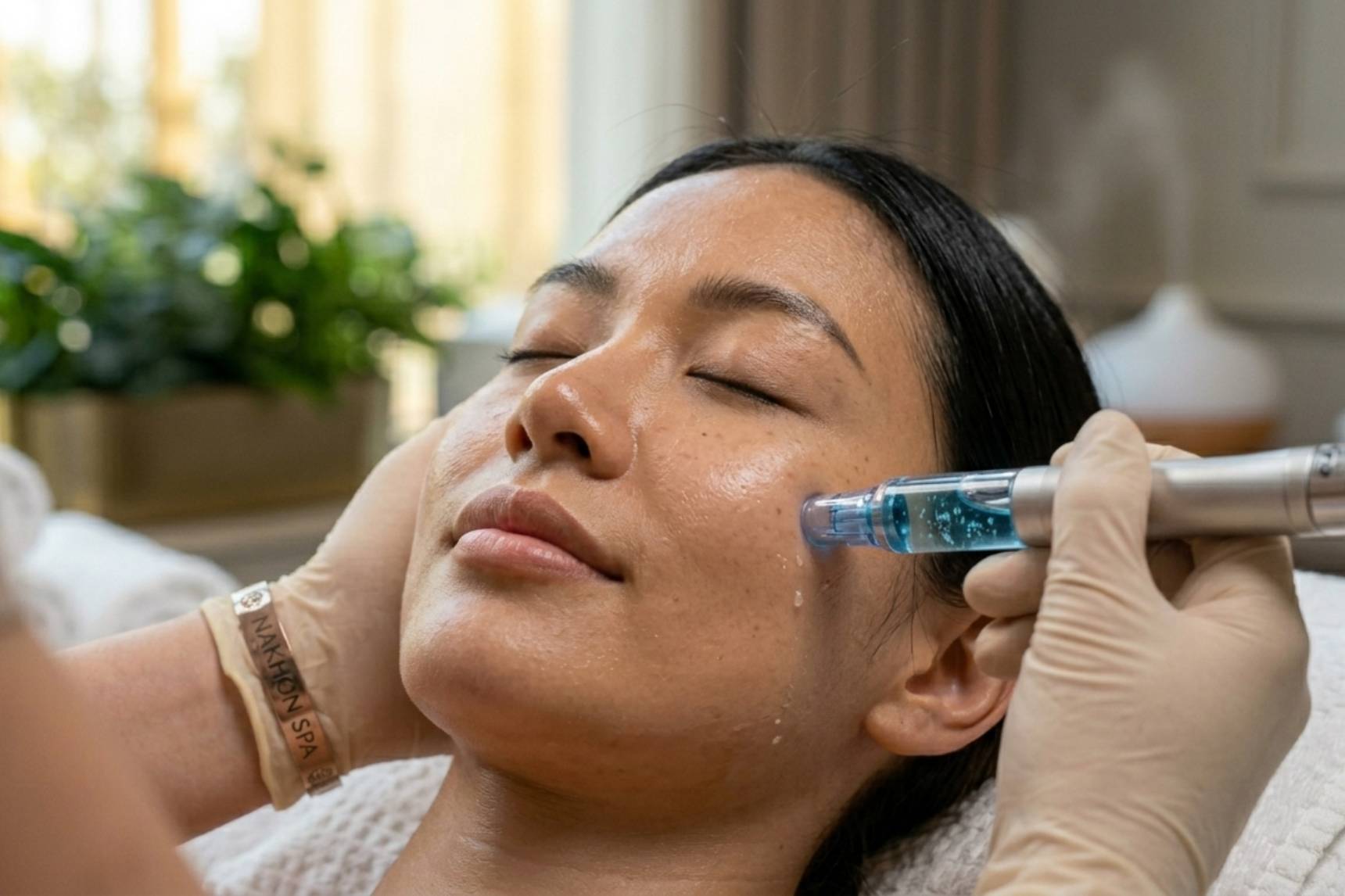
The world of medical aesthetics and high-end spa treatments has evolved at a dizzying pace. We are no longer limited to standard creams and simple steam facials to turn back the clock. Today, the pursuit of flawless, radiant skin often leads to a crossroads, bringing us face-to-face with two of the most popular, talked-about treatments in the modern skincare industry: the HydraFacial and Laser Skin Resurfacing.
If you have been doing your research, you have likely seen glowing testimonials for both. But when it comes down to choosing the right path for your unique complexion, the sheer volume of information can feel overwhelming. You might be wondering if a gentle, liquid-based exfoliation is enough, or if you need the high-tech, targeted power of concentrated light beams.
Navigating this choice is about more than just booking an appointment; it is about understanding the biology of your own skin, your lifestyle, and your ultimate aesthetic goals. Both treatments offer remarkable transformations, but they achieve these results through fundamentally different mechanisms. In this comprehensive guide, we are going to dive deep into the science, the experience, and the long-term benefits of both HydraFacial and laser treatments. We will explore how environmental factors impact your skin, the physiological changes these treatments trigger, and how you can make the most educated decision for your facial health.
The Science of Skin Renewal: A Foundation for Understanding
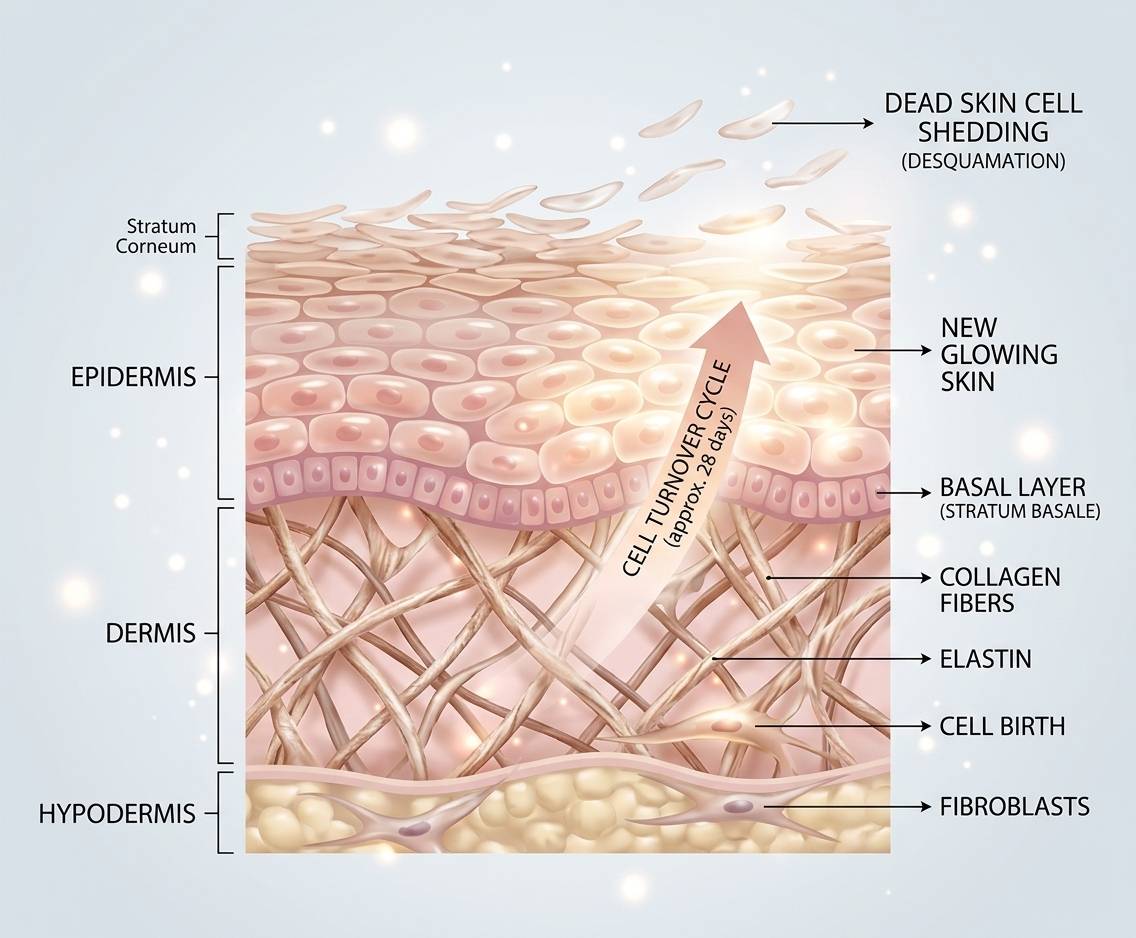
Before we pit these two heavyweight treatments against one another, it is crucial to understand exactly what they are trying to fix. The human skin is a marvel of biological engineering. It is your body’s largest organ and its first line of defense against the outside world. Every single minute of the day, you lose about thirty thousand to forty thousand dead skin cells off the surface of your skin. Over the course of a year, that adds up to nearly nine pounds of dead skin.
Fun Fact: The dust in your home is largely made up of your own dead skin cells! Our epidermis is constantly shedding and renewing itself in a cycle that takes roughly twenty-eight days when we are in our twenties. However, as we age, this cellular turnover process slows down dramatically. By the time we reach our forties and fifties, that cycle can stretch to forty-five or even sixty days.
When dead skin cells linger on the surface for too long, they create a dull, tired appearance. They fall into our pores, mixing with sebum (our natural skin oils) and environmental pollutants to create blackheads and breakouts.
Furthermore, our skin is constantly under siege from environmental aggressors. If you live in a vibrant, bustling metropolis like Bangkok, your skin faces a daily barrage of high humidity, intense ultraviolet radiation from the tropical sun, and urban pollutants—most notably PM 2.5 particulate matter. These microscopic particles are small enough to penetrate the pores, causing oxidative stress, accelerating the breakdown of collagen, and triggering premature aging.
Therefore, effective skincare must do two things: it must accelerate cellular turnover to remove the damaged, dull outer layer, and it must stimulate the deeper layers to produce fresh collagen and elastin. This is exactly where our two contenders step into the ring. They just use entirely different weapons.
Deep Dive: The Liquid Miracle of the HydraFacial
Imagine being able to power-wash your face, vacuum out the debris from your pores, and simultaneously flood your skin with nutrient-rich serums, all without a single moment of pain. That is the magic of the HydraFacial. Over the past few years, the HydraFacial has transcended the status of a mere beauty trend to become a foundational pillar of modern aesthetic maintenance. It bridges the gap between a relaxing traditional spa facial and a rigorous clinical skin treatment.
The secret behind the HydraFacial lies in its patented Vortex-Fusion technology. Instead of using harsh abrasive wands or manual squeezing to extract impurities, the HydraFacial device uses a specialized spiral tip combined with pneumatic vacuum suction. This creates a miniature vortex of liquid that rapidly circulates over the skin.
The process is meticulously broken down into several key phases. The journey begins with cleansing and exfoliation. The device gently sweeps away the uppermost layer of dead skin cells and sebum while bathing the skin in a soothing, hydrating fluid. Next comes the acid peel. Unlike traditional chemical peels that can leave your face red, stinging, and flaking for days, the HydraFacial uses a mild, non-irritating mixture of glycolic and salicylic acids. This solution loosens the deep-seated debris and dirt lodged within your pores without causing trauma to the surrounding tissue.
Then comes the extraction phase, which is often the most deeply satisfying part of the experience. The vacuum suction effortlessly pulls blackheads, whiteheads, and environmental pollutants out of the skin.
Fun Fact: At the end of a HydraFacial, your aesthetician can show you the "gunk tank," a clear container at the base of the machine that holds all the extracted dirt, dead skin, and oxidized sebum. While it might sound a bit gross, seeing exactly what was removed from your pores is incredibly gratifying and offers undeniable proof of the treatment's efficacy.
Finally, the skin is infused with a customized cocktail of intensive serums. Because the pores have been completely cleared of obstructions, these serums can penetrate much deeper than any over-the-counter lotion. Depending on your specific needs, the infusion might contain hyaluronic acid for profound hydration, peptides to stimulate collagen and reduce fine lines, or antioxidants to repair environmental damage.
The beauty of the HydraFacial is its universal appeal. It is highly sought after by women preparing for weddings or major events, but it is also becoming incredibly popular in the realm of men's grooming. Gentlemen who want sharp, clean, and clear skin without any fuss, downtime, or visible signs of having "work done" find the HydraFacial to be the perfect, efficient solution. You can walk in on your lunch break and walk out with a brilliant, undeniable glow.
The Power of Light: Understanding Laser Skin Resurfacing
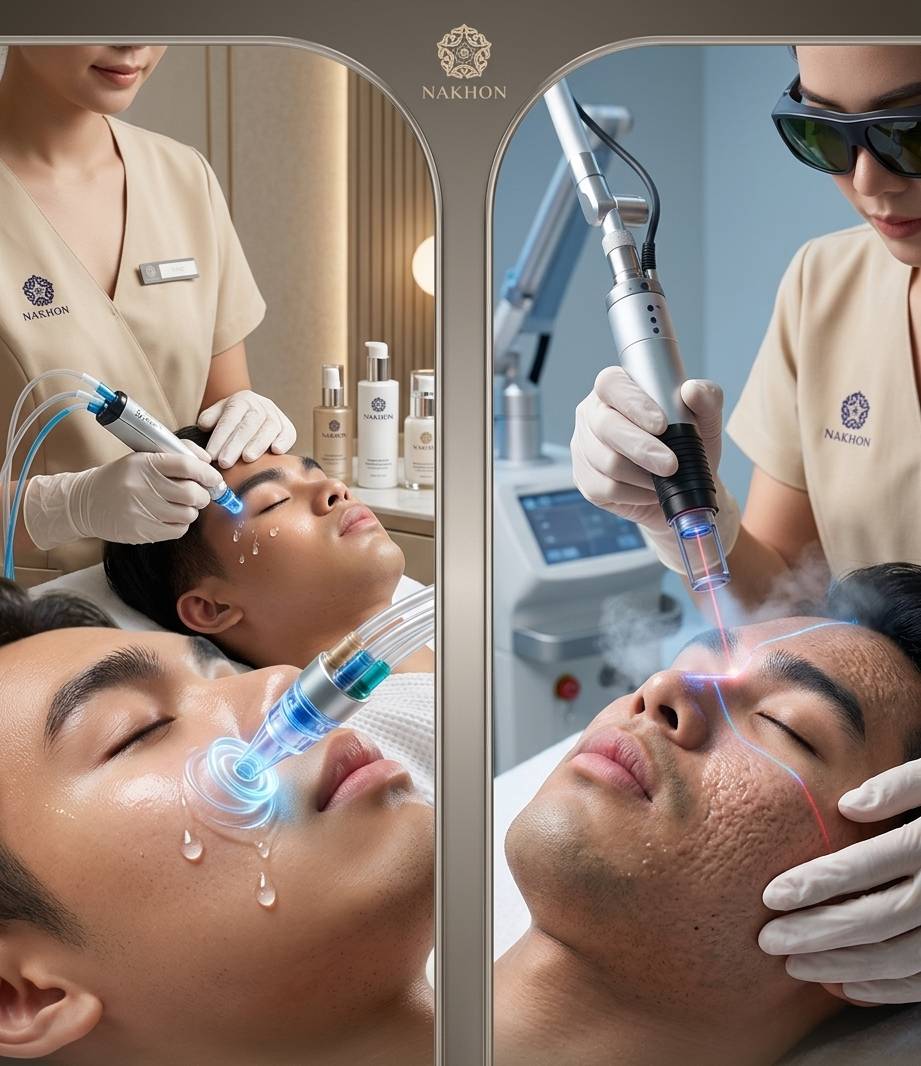
If the HydraFacial is a luxurious, high-tech power wash, laser skin resurfacing is an architectural renovation of your skin's foundation. Lasers operate on the principle of using focused light energy to treat skin concerns at a cellular level. While the word "laser" might sound intimidating, the technology has been refined over decades to become incredibly safe and precise.
To understand lasers, we have to look at how the body heals itself. Lasers intentionally create controlled thermal damage in the skin. By sending short, concentrated pulsating beams of light at irregular skin, the laser removes the damaged outer layers precisely while simultaneously heating the underlying dermis. This heat is the crucial catalyst. It tricks the body into thinking it has been injured, which kicks the natural healing response into high gear. The body rushes blood, nutrients, and, most importantly, new collagen and elastin to the treated area to repair the "damage."
There are two primary categories of lasers used in skincare: ablative and non-ablative.
Ablative lasers (such as Carbon Dioxide or Erbium lasers) are the heavy-duty machines of the aesthetic world. They literally vaporize the topmost layer of the skin while heating the underlying tissue. These are the go-to choices for severe sun damage, deep-set wrinkles, and significant acne scarring. The results from an ablative laser can be truly dramatic, taking years off a patient's appearance. However, this power comes at a cost: downtime. Patients can expect several days to a couple of weeks of redness, swelling, peeling, and scabbing as the new skin forms.
Non-ablative lasers bypass the outer layer of the skin entirely and deliver heat directly into the deeper tissues to stimulate collagen growth over time. While the results are more subtle and gradual than ablative lasers, requiring multiple sessions to see significant improvement, the downtime is incredibly minimal.
Fun Fact: The first laser used in dermatology was the ruby laser, developed in the 1960s. It was initially used to target dark pigments in the skin, such as tattoos and birthmarks. Today, the technology has advanced so much that we can target specific colors, depths, and even specific types of tissue with pinpoint accuracy.
Lasers are the ultimate corrective tool. If you are dealing with pronounced hyperpigmentation, stubborn age spots, vascular lesions like broken capillaries, or the textured craters left behind by severe acne, a HydraFacial simply will not be able to reach deep enough to fix the structural issue. A laser, however, can remodel the skin from the inside out, providing a permanent solution to deep-rooted aesthetic problems.
Head-to-Head Comparison: Breaking Down the Differences
Now that we understand the mechanics behind both treatments, how do you decide which one is right for your specific needs? The choice ultimately comes down to four main factors: your primary skin concern, your tolerance for downtime, your timeline, and your budget.
Depth of Treatment
The HydraFacial is strictly a surface-level warrior. It excels at managing the epidermis. It corrects dullness, mild congestion, superficial dehydration, and gives the skin a temporary but brilliant plumpness. It does not, however, alter the fundamental structure of the deeper dermal layers. Laser treatments, conversely, are profound structural engineers. They reach deep into the dermis to break apart stubborn melanin that causes dark spots, obliterate broken blood vessels, and force the massive production of new collagen to fill in wrinkles and scars.
Downtime and Recovery
Downtime is perhaps the most significant deciding factor for many people. A HydraFacial is famously known as a "lunchtime procedure." There is absolutely zero downtime. You will leave the spa looking better than when you walked in, with a dewy, radiant finish. You can immediately apply makeup and return to your daily activities. This makes it the undisputed champion for event preparation.
Lasers demand patience and a willingness to undergo a healing process. Depending on the intensity of the laser used, your skin will look and feel like it has a severe sunburn for anywhere from a few hours to a few days. With more aggressive ablative lasers, you will experience actual peeling and crusting. You must meticulously avoid the sun and follow a strict aftercare regimen. Lasers are not a quick fix for an event tomorrow; they are an investment in your skin for the next decade.
Comfort Levels
Pain and comfort levels also diverge sharply between the two. The HydraFacial is a relaxing, spa-like experience. Patients often describe the sensation as a cool, wet paintbrush moving across the face. Lasers, while usually preceded by a topical numbing cream to maximize comfort, can be uncomfortable. The sensation is frequently likened to the snapping of a small rubber band against the skin, accompanied by a feeling of intense heat.
Longevity of Results
The glow from a HydraFacial is immediate and spectacular, but it is relatively short-lived. To maintain that flawless clarity, most aestheticians recommend a session every four to six weeks, making it an ongoing part of your lifestyle maintenance. Laser results, however, are progressive and long-lasting. While it may take a few weeks or even months to see the final outcome as collagen continues to build, the structural improvements to scars, deep wrinkles, and pigmentation can last for years.
The Environmental Factor: Skincare in a Bustling City
We cannot discuss skincare without acknowledging the environment we live in. Your surroundings dictate what your skin needs on a daily basis. In dense urban environments, the air is thick with invisible aggressors. Exhaust fumes, industrial emissions, and microscopic dust particles settle onto the skin every single day. When fine particulate matter mixes with the natural oils and sweat produced by the skin—especially in warmer, humid climates—they create a toxic sludge that clogs pores and suffocates the complexion.
This environmental reality heavily influences how we should approach professional treatments. If your primary battle is against the grime of the city, the HydraFacial is incredibly effective. By routinely vacuuming out the pores and neutralizing free radicals with antioxidant infusions, you are actively preventing the inflammation and premature aging caused by city life. It is the ultimate urban skin rescue.
However, if years of living in a sunny, tropical climate have already taken their toll, resulting in leathery texture, deep sunspots, and elastosis (the breakdown of elastic tissue due to sun exposure), a surface cleaning will not undo the damage. This is when stepping up to a laser treatment becomes necessary to peel away the years of solar damage and rebuild a healthier, stronger barrier.
Can You Do Both? The Ultimate Hybrid Approach
One of the most common misconceptions in skincare is that you must swear allegiance to only one type of treatment. In reality, the most stunning, long-lasting results are often achieved through a carefully curated combination of therapies. HydraFacials and laser treatments do not have to be enemies; in fact, they can be the best of friends when utilized strategically.
Think of it like painting a masterpiece. You would not apply expensive oil paints to a dirty, uneven canvas. A HydraFacial serves as the perfect preparatory step before embarking on a series of laser treatments. By thoroughly clearing the pores, removing dead cellular buildup, and deeply hydrating the tissue, the HydraFacial ensures that the skin is in its healthiest possible state. Hydrated, healthy skin responds much better to the thermal energy of a laser, often resulting in better collagen production and a more even healing process.
Furthermore, once the skin has fully healed from a laser procedure, incorporating regular HydraFacials is an excellent way to protect the investment. The laser does the heavy lifting to correct deep issues, and the HydraFacial maintains the surface clarity, ensuring that new congestion does not obscure your beautifully resurfaced skin.
Conclusion: Making the Right Choice for Your Complexion
Choosing between a HydraFacial and a laser treatment is not about figuring out which one is universally "better." It is about determining which tool is appropriate for the specific job at hand. If your goal is to maintain a healthy, vibrant, and incredibly clean complexion without any interruption to your busy schedule, the HydraFacial is an unparalleled experience. It is the gold standard for routine maintenance, urban detoxification, and immediate radiance.
However, if you are looking to turn back the hands of time, erase deep-seated scars, correct significant sun damage, and completely remodel the architecture of your skin, laser technology remains the undisputed king of correction.
At Nakhon Spa, we believe that world-class skincare should never be a guessing game. True luxury lies in personalization. Whether you are seeking a soothing urban escape to wash away the city's pollution, or looking for expert guidance on profound skin transformation, the journey begins with understanding your unique canvas.