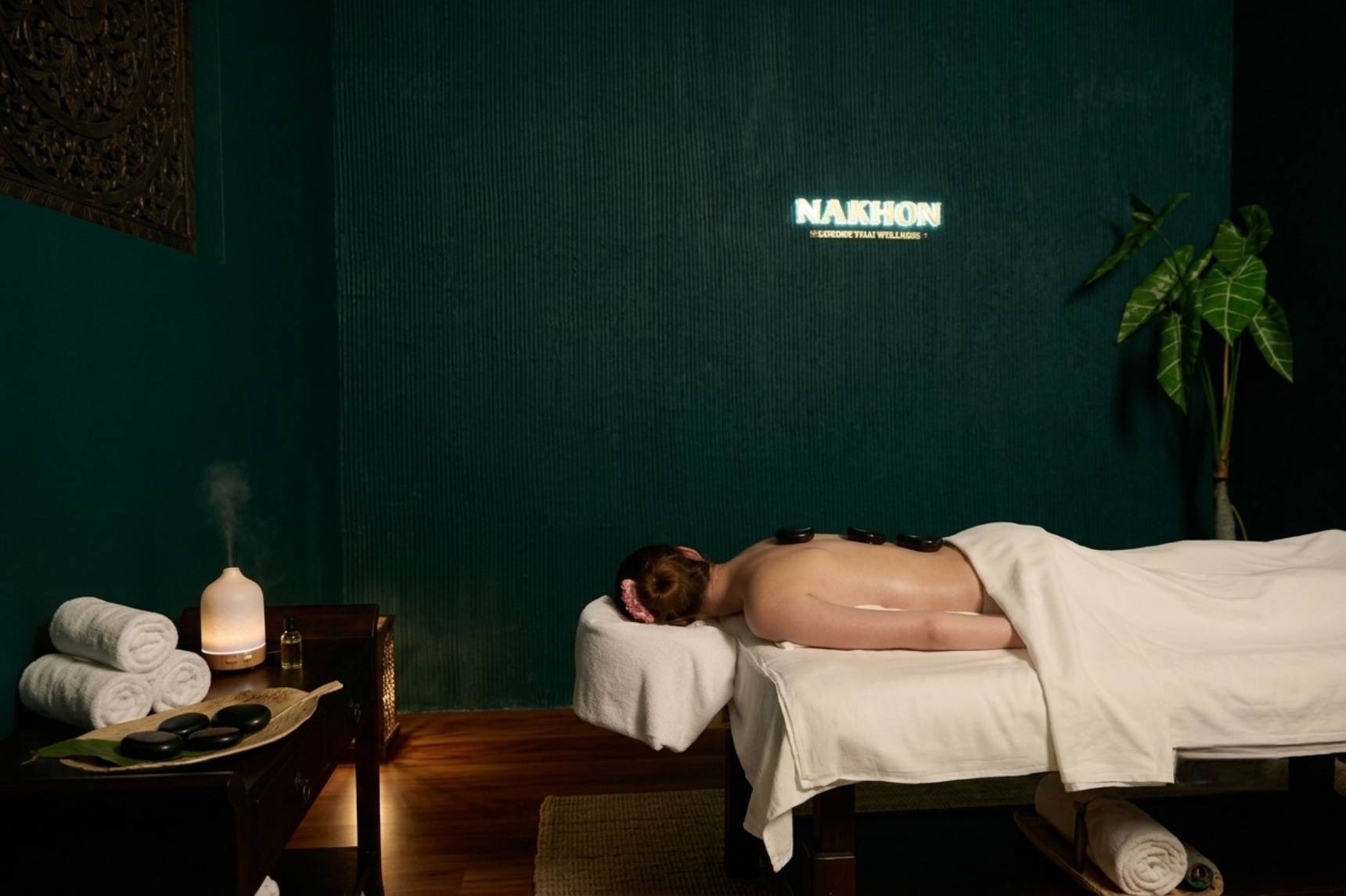
If you were to ask the average person to define Thai wellness, their mind would likely jump to a single, globally recognized image: a deeply relaxing, stretch-intensive massage. While Traditional Thai Massage, or Nuad Thai, is undoubtedly a cornerstone of the country's healing arts, it is merely the most visible branch of a massive, ancient tree deeply rooted in holistic philosophy.
At Nakhon Spa, we believe that to truly benefit from these ancient practices, one must understand the profound wisdom that guides them. True Thai wellness is not a luxury reserved for a weekend treat; it is a comprehensive system of preventative healthcare, spiritual alignment, and physical harmony that has been refined over millennia. It is a seamless blend of physical manipulation, botanical medicine, nutritional awareness, and spiritual mindfulness.
Welcome to a journey of discovery. We invite you to step beyond the massage table and explore the rich, vibrant, and deeply effective philosophy of Traditional Thai Medicine (TTM). By understanding the history, the elemental forces, the hidden energy pathways, and the profound spiritual intentions behind these therapies, you will transform your next spa visit from a simple physical release into a holistic awakening.
The Cross-Cultural Origins of a Healing Art
To understand Thai wellness, we must first look at a map. Thailand is situated at the geographic and cultural crossroads of two of the world's oldest civilizations: India and China. The philosophy of Thai wellness is a beautiful, synthesized tapestry woven from Indian Ayurvedic principles, traditional Chinese medicine, and indigenous Southeast Asian folk healing, all viewed through the peaceful lens of Theravada Buddhism.
The undisputed founding father of Traditional Thai Medicine is a legendary figure known as Dr. Jivaka Kumar Bhaccha (often referred to affectionately in Thailand as Shivago Komarpaj).
A Fun Discovery: Dr. Shivago was not a mythical deity, but a real historical figure who lived over 2,500 years ago in northern India. He was an Ayurvedic physician of immense renown and, most notably, served as the personal physician to the Buddha himself, as well as the Magadha King Bimbisara.
When Buddhist monks began their migration across the Asian continent to spread the teachings of the Dharma, they brought Dr. Shivago’s medical knowledge with them. In ancient times, Buddhist temples (Wats) were the center of the community, serving not only as places of worship but also as hospitals, schools, and community centers. The monks were the first doctors, administering herbal remedies and massage to the local population.
This knowledge was passed down orally from master to apprentice for centuries. Tragically, a massive portion of the written medical texts was destroyed in 1767 when the ancient capital of Ayutthaya was sacked by Burmese invaders. However, the philosophy survived in the minds of the healers. Decades later, King Rama III of the new Chakri Dynasty recognized the danger of losing this cultural treasure. He commissioned the surviving knowledge—comprising anatomy, massage points, and herbal recipes—to be carved into stone plaques and embedded in the walls of Wat Pho in Bangkok. Today, Wat Pho is recognized as the first public university in Thailand and remains the spiritual home of Traditional Thai Massage.
The Four Elements: The Foundation of Thai Physicality
Western medicine often views the human body as a complex biological machine made of cells, tissues, and organs. Traditional Thai Medicine, heavily influenced by its Ayurvedic roots, views the body as an ecosystem composed of the same fundamental elements that make up the universe.
In Thai wellness philosophy, human health is defined by the perfect balance of four vital elements, known as the Mahabhuta Rupa: Earth, Water, Wind, and Fire. When these elements are in harmony, a person experiences vibrant health, mental clarity, and emotional stability. When one or more elements become excessive or deficient, illness, pain, and fatigue arise.
Earth (Din) represents the solid structures of the body. This encompasses everything that gives you form and stability—your bones, muscles, tendons, ligaments, skin, and organs. In TTM, there are 20 physical components associated with the Earth element. An imbalance in Earth often manifests as joint pain, muscle stiffness, bone diseases, or a general feeling of heaviness and lethargy. At Nakhon Spa, we address Earth imbalances through deep tissue manipulation and the application of warm herbal compresses to soften rigidity.
Water (Nam) represents the fluid components of the body. This includes blood, lymph fluid, saliva, sweat, and digestive juices. The Water element is responsible for nourishment, lubrication, and cohesion. There are 12 physical components related to Water. When Water is out of balance, a person might experience poor circulation, swelling, sluggish digestion, or respiratory congestion. Treatments that encourage lymphatic drainage and improve circulation are essential for bringing Water back into equilibrium.
Wind (Lom) is perhaps the most dynamic and critical element in Thai healing. Wind represents movement and energy. It dictates not only the physical air we breathe into our lungs but also the circulation of blood, the movement of food through the digestive tract, and the electrical impulses of the nervous system. Wind is the life force itself. Imbalances in Wind can cause dizziness, anxiety, stiffness, digestive cramps, and shooting nerve pains. Traditional Thai Massage was primarily designed to clear blockages so that the Wind element can flow freely throughout the body.
Fire (Fai) represents heat, metabolism, and transformation. Fire is what digests our food, regulates our body temperature, and gives us vitality and enthusiasm. When the Fire element burns too hot, it results in fevers, inflammation, heartburn, and a quick temper. When Fire is deficient, one might feel constantly cold, suffer from slow digestion, and experience deep physical and mental exhaustion.
A Fun Discovery: In traditional Thai wellness, a person's core elemental makeup is believed to be determined by the exact month they were conceived, tying human biology intimately to the cycles of the seasons. Furthermore, the seasons themselves dictate our health; the hot season exacerbates the Fire element, the rainy season affects the Wind element, and the cool season challenges the Water element.
The Architecture of Energy: Navigating the Sen Lines
If the four elements represent the materials that make up the body, the Sen lines are the architectural framework that holds them together.
In Chinese medicine, life force energy (Qi) flows through Meridians. In Indian Ayurveda, Prana flows through Nadis. In Traditional Thai Medicine, this vital energy is called Lom Pran (the wind of life), and it travels through a complex invisible network of pathways known as the Sen lines.
According to ancient Thai anatomical theory, there are exactly 72,000 Sen lines mapping the human body. However, for the purposes of healing and massage, therapists focus on the ten primary pathways, known collectively as the Sen Sib. These ten master lines begin at the navel—the center of life and the physical connection to the mother—and radiate outward, terminating at the extremities of the body, including the fingertips, toes, eyes, ears, and nose.
The philosophy of Thai wellness dictates that physical ailments, emotional stress, and environmental toxins can cause blockages along these Sen lines. When a line is blocked, the Lom Pran cannot flow. Imagine a kink in a garden hose; the pressure builds up behind the kink, while the garden ahead dries up and withers. In the body, this manifests as tension, pain, illness, or emotional stagnation.
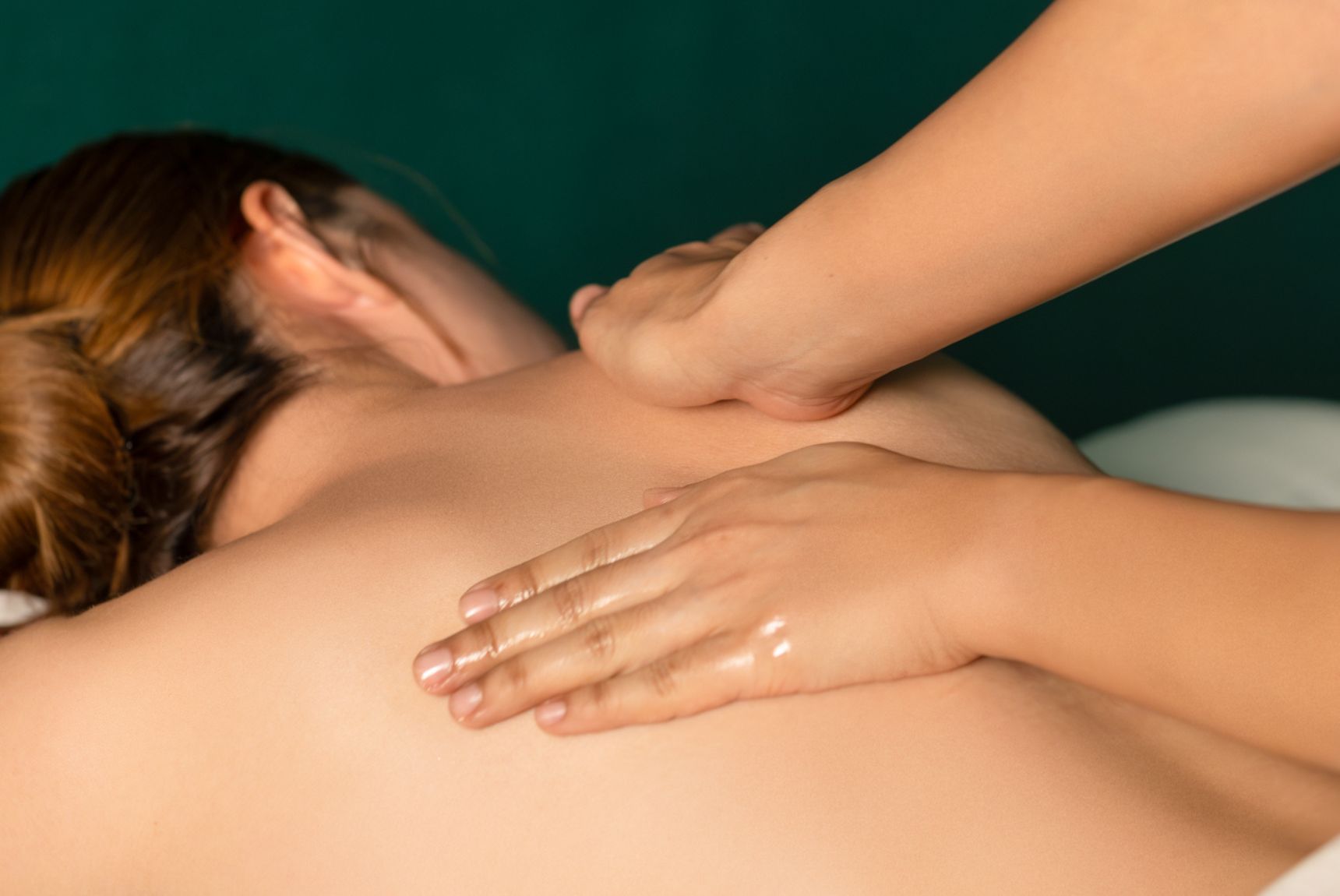
When you receive a traditional Thai massage at Nakhon Spa, your therapist is not merely kneading your muscles to relieve lactic acid build-up, as is common in Western modalities like Swedish massage. Instead, they are performing a deeply sophisticated acupressure technique. By using their thumbs, palms, elbows, and feet to press along the Sen lines, they are systematically unkinking the garden hose. The characteristic yoga-like stretches of Thai massage are designed to gently pull and elongate these energy lines, "opening the wind gates" and allowing the life force to surge back into depleted areas of the body.
This is why, after a proper Thai massage, you do not feel sleepy or lethargic. Instead, you feel incredibly grounded yet vibrantly energized. Your structural framework has been realigned, and your internal energy is flowing unimpeded.
The Spiritual Heart of Thai Wellness: Metta
Perhaps the most beautiful and distinguishing feature of Thai wellness philosophy is its profound spiritual foundation. In the West, healthcare and wellness are often viewed as purely clinical or mechanical transactions. In Thailand, healing is an act of spiritual devotion.
Because Traditional Thai Medicine was born in the Buddhist temples, the mindset of the practitioner is considered just as important as their technical skill. The core of this mindset is a concept called Metta, a Pali word that translates to "loving-kindness" or "compassionate touch."
Before a master Thai massage therapist begins a session, they will often perform a brief, silent Wai Khru (a gesture of respect to the teachers). They center their mind, focus their breathing, and set a specific intention to heal the person lying before them. The massage itself is taught as a physical application of Vipassana (mindfulness meditation).
The practitioner must be entirely present in the moment, feeling the tension in the receiver's body, sensing the flow of energy, and responding with intuitive, compassionate touch. There is no rushed, mechanical routine. It is a silent, energetic dialogue between the giver and the receiver.
When you experience wellness treatments at Nakhon Spa, you are experiencing the power of Metta. The profound relaxation you feel is not just the result of released muscle tension; it is the comforting, physiological response to being treated with genuine, focused loving-kindness. It is the soothing of the nervous system that occurs when you are in the hands of someone whose sole intention is your well-being.
Nature’s Pharmacy: The Wisdom of Samunprai (Thai Herbalism)
No exploration of Thai wellness philosophy is complete without a deep dive into Samunprai, or traditional Thai herbal medicine. While massage addresses the external physical structure and the energetic lines, herbalism is used to balance the elements from within and provide targeted relief to the body’s tissues.
Thailand’s lush, tropical climate is home to a staggering variety of medicinal plants, and the indigenous knowledge of how to harvest, combine, and apply these botanicals is astonishingly complex. In Thai wellness, herbs are not just categorized by their chemical compounds, but by their Ya Rot—their therapeutic taste. There are nine primary tastes in TTM (astringent, sweet, nauseating, bitter, hot, etc.), and each taste is prescribed to pacify specific elemental imbalances. For example, hot and spicy herbs are used to stimulate a sluggish Wind element, while bitter herbs are used to cool an overheated Fire element.
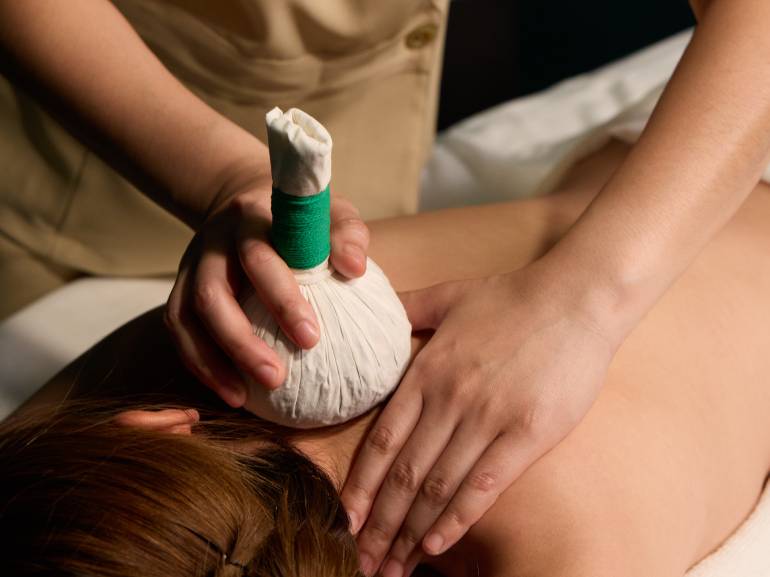
One of the most famous and beloved applications of Samunprai in the spa environment is the Luk Pra Kob, or the traditional Thai herbal compress.
A Fun Discovery: The herbal compress was originally developed centuries ago for Thai soldiers returning from battle. The tightly bound bundles of herbs were steamed and pressed into the soldiers' bodies to rapidly heal deep muscle bruises, reduce severe joint inflammation, and soothe the psychological trauma of warfare.
Today, at Nakhon Spa, we use these same ancient recipes to combat the modern traumas of stress, poor posture, and physical exertion. A typical herbal compress is a tightly bound cotton poultice containing a proprietary blend of therapeutic botanicals. While the recipes vary, they almost always contain a holy trinity of Thai healing herbs:
- Plai (Cassumunar Ginger): This is the crown jewel of Thai herbal medicine. Found almost exclusively in Southeast Asia, Plai has profound anti-inflammatory and analgesic properties. It penetrates deep into the muscle tissue to relieve spasms, joint pain, and stiffness without the intense burning sensation of other gingers.
- Turmeric (Khamin Chan): Known globally for its healing properties, turmeric is used in Thai compresses to purify the skin, promote cellular regeneration, and calm internal heat and inflammation.
- Kaffir Lime (Makrut): The rind of the kaffir lime is rich in essential oils. When steamed, it releases a potent, uplifting citrus aroma that clears the respiratory tract, while its topical application helps to cleanse the blood and detoxify the skin.
Other ingredients frequently include lemongrass for circulation, camphor to cool and stimulate the mind, and tamarind leaves to soften the skin. When the steamed compress is pressed rhythmically along the Sen lines, the heat dilates the pores, allowing the potent herbal oils to sink deeply into the muscle tissue, simultaneously addressing the Earth element (muscles) and the Wind element (energy flow).
Ancient Wisdom for the Modern World
It is easy to look at traditional philosophies as antiquated relics of the past. However, the philosophy of Thai wellness is arguably more relevant today than it has ever been.
Modern life is a recipe for elemental imbalance. We sit hunched over glowing screens for hours, collapsing our chest cavities and restricting the flow of our Wind element. Our fast-paced, high-stress environments cause our Fire element to burn erratically, leading to burnout and chronic inflammation. Our diets and sedentary lifestyles cause our Earth and Water elements to become sluggish and heavy.
Western medicine excels at treating acute illness and trauma, but it often struggles with the chronic, low-grade malaise that plagues the modern worker. This is where the holistic philosophy of Thai wellness shines. It does not wait for a disease to manifest; it actively works to maintain the body’s internal ecosystem. It reminds us that we are not machines that simply need to be fueled and driven, but complex, energetic beings that require balance, deep rest, and the compassionate touch of our fellow humans.
When you step into Nakhon Spa, you are not just escaping the noise of Bangkok for an hour or two. You are stepping into a centuries-old tradition of holistic preservation. You are engaging with a philosophy that views your mind, your body, and your energy as a singular, beautiful ecosystem that deserves to be nurtured.
Whether it is the targeted acupressure of a traditional Thai massage opening your Sen lines, the aromatic heat of an herbal compress melting away your Earthly tensions, or the calming presence of a therapist practicing Metta, every element of your experience is steeped in profound, ancient logic.
We invite you to experience this transformation for yourself. Reconnect with your vital energy, balance your internal elements, and discover what true, holistic wellness feels like.