
In the collective imagination of global travelers, Bangkok has long been synonymous with energy. Neon-lit avenues, floating markets at dawn, rooftop bars at dusk, and a rhythm that never truly slows down. For decades, the city’s magnetism was measured in shopping bags, nightlife districts, and Instagram backdrops. Yet as the world crossed into a post-pandemic era defined by exhaustion, anxiety, and the search for meaning, Bangkok quietly rewrote its own narrative. By 2026, it no longer stood merely as a travel capital. It had become something deeper, more valuable, and far more enduring: the world’s wellness capital.
This transformation did not happen overnight, nor was it driven by trend alone. It was the result of cultural heritage, human expertise, global demand for recovery, and a city uniquely positioned to answer a question modern travelers increasingly ask: Where can I truly heal—physically, mentally, and emotionally—while traveling? In this answer lies the story of how Bangkok became the world’s spa destination, and why institutions such as Nakhon Spa now stand at the forefront of what “best spa in Bangkok” genuinely means in 2026.
The numbers tell part of the story. In 2025, Bangkok topped the global tourism rankings with 30.3 million international visitors, surpassing Hong Kong, London, Paris, Dubai, and other major world hubs. These figures, reported by Euromonitor International, confirmed Bangkok’s dominance as the most visited city on earth. Yet what truly mattered was not the volume of arrivals, but the reason people came—and more importantly, why they returned.
Travelers were no longer satisfied with fleeting pleasures. Shopping malls look similar everywhere. Nightlife loses its appeal when stress follows you home. In contrast, the experience of deep physical release, mental clarity, and restored energy leaves a lasting imprint. Bangkok understood this shift earlier than most global cities, not by inventing wellness, but by elevating what it had always possessed: mastery of touch, ritualized care, and a philosophy of balance rooted in Thai culture.

At the heart of Bangkok’s wellness ascension lies Thai massage—not as a commodity, but as a discipline. For centuries, traditional Thai massage has been practiced as a holistic healing art, combining acupressure, assisted stretching, breath awareness, and energetic pathways. In the modern era, however, Bangkok transformed this heritage into a globally respected standard. The city became a training ground for elite therapists, a laboratory for innovation, and a destination where massage is not improvised, but choreographed with anatomical intelligence and therapeutic intent.
What sets Bangkok apart from other wellness destinations is not merely infrastructure or luxury, but human capital. Therapists here are not interchangeable service providers; they are specialists, often trained for years, many competing and being recognized on international stages. This culture of excellence has redefined expectations. Visitors arriving in 2026 no longer ask whether Bangkok has good spas. They ask which spa offers the highest level of mastery, the most refined techniques, and the deepest results.
This is where Nakhon Spa enters the conversation—not as a trend follower, but as a defining force. Positioned at the intersection of tradition and modernity, Nakhon Spa represents a new benchmark in Bangkok’s wellness ecosystem. It embodies a philosophy that has become increasingly rare worldwide: the belief that the best massage and the best facial should not be separate experiences, but complementary expressions of the same pursuit—total restoration.
In many global cities, spa menus read like fragmented offerings. A facial here, a massage there, often delivered by different specialists with little cohesion. Bangkok’s evolution in 2026 challenges this model. At leading institutions like Nakhon Spa, body and face are treated as interconnected systems. Stress held in the shoulders manifests in facial tension. Poor circulation dulls the skin. Emotional fatigue alters posture and breath. True wellness addresses these layers together.
Nakhon Spa’s approach reflects this understanding. Its treatments are inspired by champion-level massage techniques—methods refined through international competitions, rigorous training, and continuous evaluation. These are not generic sequences, but adaptive protocols responding to the individual body. Pressure is intentional, rhythm calibrated, and transitions fluid. The result is not simply relaxation, but measurable release: improved mobility, reduced inflammation, and a nervous system guided back into balance.
The facial treatments follow the same philosophy. Rather than superficial beauty rituals, they are designed as therapeutic interventions. Lymphatic drainage techniques sculpt and detoxify. Muscle stimulation restores tone. Touch patterns improve circulation and oxygenation. When paired with expert bodywork, the face reflects what the body feels—lightness, clarity, vitality. This integration is precisely why Nakhon Spa has become synonymous with the idea of experiencing the best massage and best facial in one place.
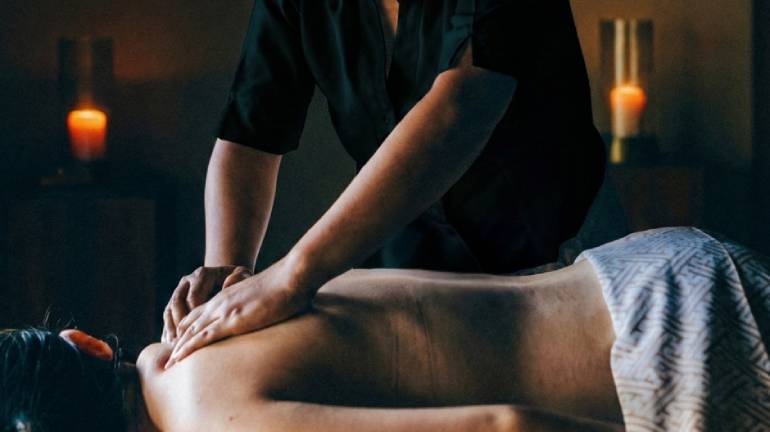
Bangkok’s rise as a wellness capital also coincides with a broader global redefinition of luxury. In 2026, luxury is no longer about excess, but about expertise and time. Travelers value environments where they can slow down without compromising quality. Bangkok offers this paradox beautifully. Despite its size and energy, the city contains sanctuaries of silence, where ancient rituals unfold behind unassuming doors. Nakhon Spa exemplifies this contrast: refined spaces that disconnect guests from urban chaos, yet remain deeply connected to Thai cultural identity.
Cultural authenticity is another reason Bangkok outpaced other global cities in wellness tourism. Unlike destinations that imported spa concepts as lifestyle accessories, Bangkok’s wellness scene is indigenous. Thai massage, herbal compress therapy, and holistic care are woven into everyday life, not staged performances for visitors. This authenticity resonates with travelers seeking meaning, not spectacle. By 2026, Bangkok’s spas are no longer seen as indulgences, but as destinations of learning—places where guests gain insight into how the body can function when properly cared for.
The longevity movement further accelerated this shift. As populations age and awareness around preventive health grows, wellness tourism increasingly focuses on long-term benefits rather than instant gratification. Bangkok’s spa culture aligns perfectly with this mindset. The city offers therapies that improve circulation, joint health, posture, and stress regulation—foundations of longevity rather than cosmetic quick fixes. Nakhon Spa’s emphasis on structural massage, deep tissue mastery, and holistic facial therapy positions it squarely within this global movement toward sustainable well-being.
It is also worth noting that Bangkok’s wellness rise has reshaped traveler behavior. Visitors in 2026 are staying longer. They plan spa journeys as intentionally as culinary tours. Some return annually, not for novelty, but for continuity—building relationships with therapists, tracking physical progress, and integrating spa rituals into their lifestyle. This loyalty-driven model contrasts sharply with mass tourism patterns of the past, signaling a more stable, high-value future for the city.
From an SEO perspective, this evolution explains why search terms such as “best spa in Bangkok,” “best massage Bangkok,” and “best facial Bangkok” have shifted in intent. Users are no longer browsing casually. They are researching outcomes, credentials, and philosophy. Nakhon Spa’s positioning aligns with this demand, offering not only services, but a narrative of excellence rooted in training, championship-level technique, and integrated care.
Bangkok’s transformation into the world’s spa destination in 2026 is therefore not a rebranding exercise. It is a structural change driven by culture, expertise, and global need. The city did not abandon its identity as a travel capital; it refined it. Shopping, dining, and nightlife remain—but they are no longer the main attraction. Wellness has taken center stage, redefining how Bangkok is experienced and remembered.
In this new era, spas like Nakhon Spa are not optional add-ons to a trip. They are the reason for the journey. They represent a shift from consumption to restoration, from distraction to presence. As travelers leave Bangkok, they do not simply take photos home. They carry lighter bodies, clearer minds, and a deeper understanding of what true care feels like.
That is why Bangkok, in 2026, stands unrivaled—not just as the most visited city in the world, but as the place where the world comes to heal.